Promo Products That Make Trade Show Booths Stand Out.
18 March, 2022· Artículo de David Brown


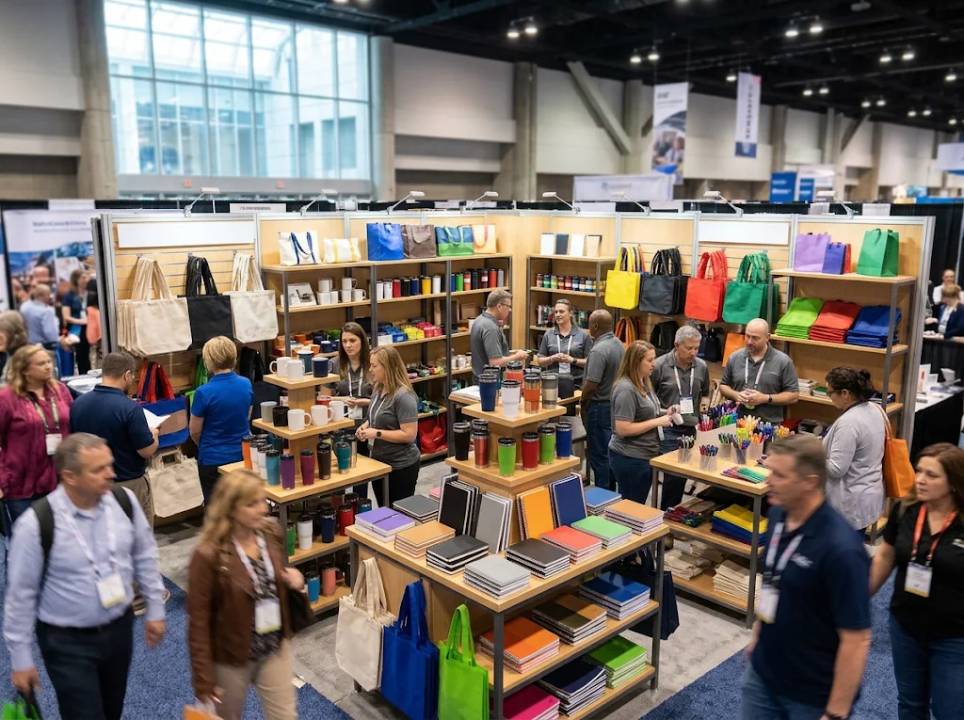
Walk through any large exhibition hall and you will notice the same pattern. Dozens of booths compete for a few seconds of attention, and the winners are rarely the loudest ones. They are the booths that hand visitors something useful to hold, carry and remember. Promotional products have played that role for decades, and a smart choice can turn a crowded trade show into a steady stream of real conversations.
Start With the Visitor, Not the Logo
Many companies pick giveaways by looking at their own branding first. Visitors think the other way around. They ask whether the item will be useful once they get home. A cheap plastic trinket ends up in a hotel bin, while a sturdy notebook or tote bag goes back to the office and sits on a desk for months.
The best promotional product is the one people keep using after the show ends. Every extra week it spends in someone's bag or on their desk is another impression for your brand, at no extra cost.
Choose Items That Match Your Audience
A booth aimed at logistics managers needs different giveaways than a booth aimed at young designers. Think about who walks the aisles. Procurement teams often prefer practical office items such as pens, notepads and desk organizers. Creative professionals respond to well designed tote bags, stickers and reusable bottles.
It also helps to think about the moment of the visit. Visitors who stay for a demo can receive a premium item, while quick passers by can get something small and light. This tiered approach keeps your budget under control and rewards genuine interest.
Build a Booth That Invites a Conversation
Giveaways work best when they start a conversation instead of ending one. Place a small selection of items at the front of the booth, and keep the better ones behind the counter for visitors who answer a short question or scan a code. That simple exchange gives your team a reason to talk and gives you a qualified contact.
Good lighting, clear signs and a clean display matter as much as the items themselves. A neat shelf of mugs and notebooks looks more inviting than a pile of loose products on a table.
Set a Realistic Budget Early
Costs add up quickly once you include printing, shipping and storage. Decide how many items you realistically need, and order slightly more than your expected visitor count in case the show is busier than planned. Ask suppliers about minimum quantities, lead times and setup fees so there are no surprises. Rush orders usually cost much more, so place yours at least six to eight weeks before the event.
It is also smart to keep a small reserve for last minute needs, such as replacement items or extra bags to carry brochures. A calm, well planned budget keeps the team focused on visitors instead of logistics.
Think About Sustainability
Buyers are paying closer attention to the materials behind every item. Recycled paper notebooks, cotton bags and bamboo pens send a message that matches modern expectations. Ask suppliers about materials and production, and avoid packaging that adds waste. Visitors notice when a brand takes these details seriously, and many of them mention it afterwards.
Plan for International Visitors
Major trade shows draw buyers from dozens of countries. Industry groups such as UFI, the global association of the exhibition industry track how international events keep growing, which means your booth will probably meet visitors who read English as a second language. Brochures, QR code landing pages and even the text printed on your products should be ready for them.
Companies that sell across Latin America often work with Spanish business translation specialists so that catalogs, price lists and product descriptions sound natural to local buyers instead of reading like a word for word conversion. A catalog that reads well in Spanish builds trust faster than a perfect English brochure that nobody can fully read.
Check the Rules for Products and Labels
Promotional items are products, and products sold or given away in some markets must follow safety and labelling rules. Items such as children's toys, electronics and cosmetics usually need clear warnings and instructions in the local language. European regulations are a good example, and this guide on GPSR translation requirements explains what must appear on a product label and in the accompanying documents.
Even simple branded items can fall under these rules, so ask your supplier for compliance details before you order a large batch.
Measure What Happens After the Show
A giveaway only pays off if you can connect it to results. Print a unique code or short link on the item, or ask your team to record which product each lead received. After the event, compare the leads who took premium items with those who took small ones. Over a few events you will see which products bring real conversations and which ones only disappear from the table.
Follow up within a week while your booth is still fresh in their memory. A short message that mentions the item they took and the topic you discussed goes a long way.
A Simple Checklist Before You Order
Before you place an order, run through a quick list. Does the item suit your audience? Is the material responsible? Does the label meet local rules? Are the supporting materials available in the visitor's language? Can you track the results? If the answer to every question is yes, you are ready to fill your booth with products that people actually want.
Trade shows reward preparation. A thoughtful choice of promotional products, clear communication in the right language and a plan for follow up can make a modest booth feel professional and memorable.
Entradas recientes

Spanish Localization for Promo...
Spanish Catalogs for Promotion...
Invoicing Promotional Product ...
Schede Prodotto per Gadget Azi...

Video Promozionali per Fiere e...

Cómo Preparar un Catálogo de...
Compártelo.

Enlaces
Usamos cookies
Usamos cookies para ofrecerte la mejor experiencia, recordar tus preferencias y entender cómo se usa el sitio. Puedes aceptar todas, rechazar las opcionales o elegir qué categorías permitir.
Política de privacidadPreferencias de cookies
Elige qué cookies podemos usar. Las cookies necesarias permanecen activas porque el sitio no puede funcionar sin ellas.
Para más detalles, lee nuestra Política de privacidad.